
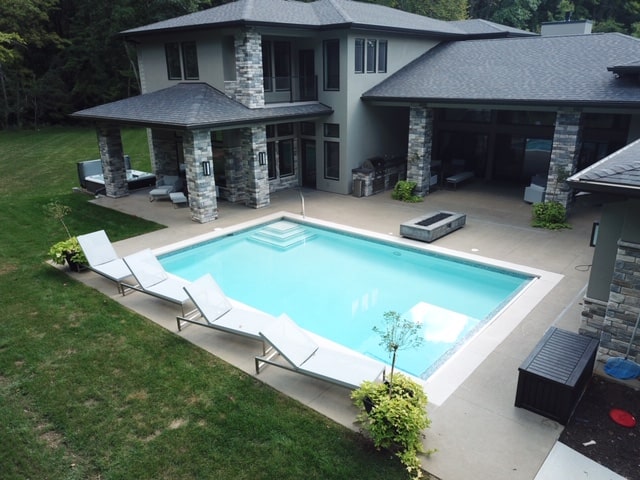
Design the space around the water.
Your pool deck sets the tone for every swim, gathering and quiet evening outside. Aquarius helps you coordinate materials, borders, drainage and coping transitions so the entire backyard feels intentional from the waterline to the patio door.
The deck is part of the pool—not an afterthought.
The right surface has to do more than look good in a sample. It needs to support wet feet, furniture, entertaining, equipment access and Indiana weather while connecting naturally to your home and landscape.
We start with how you want to use the space, then help organize the deck into practical zones: clear walking paths, comfortable seating, room for loungers, access to steps and equipment, and transitions that make the pool feel anchored to the architecture around it.
Pool deck materials, explained.
Explore the visual character, planning considerations and best-fit uses for the most common poolside surfaces.
Standard concrete
A straightforward poolside surface with a crisp, understated look. Standard concrete lets the pool shape, water color and landscaping lead the design while providing a flexible foundation for many deck layouts.
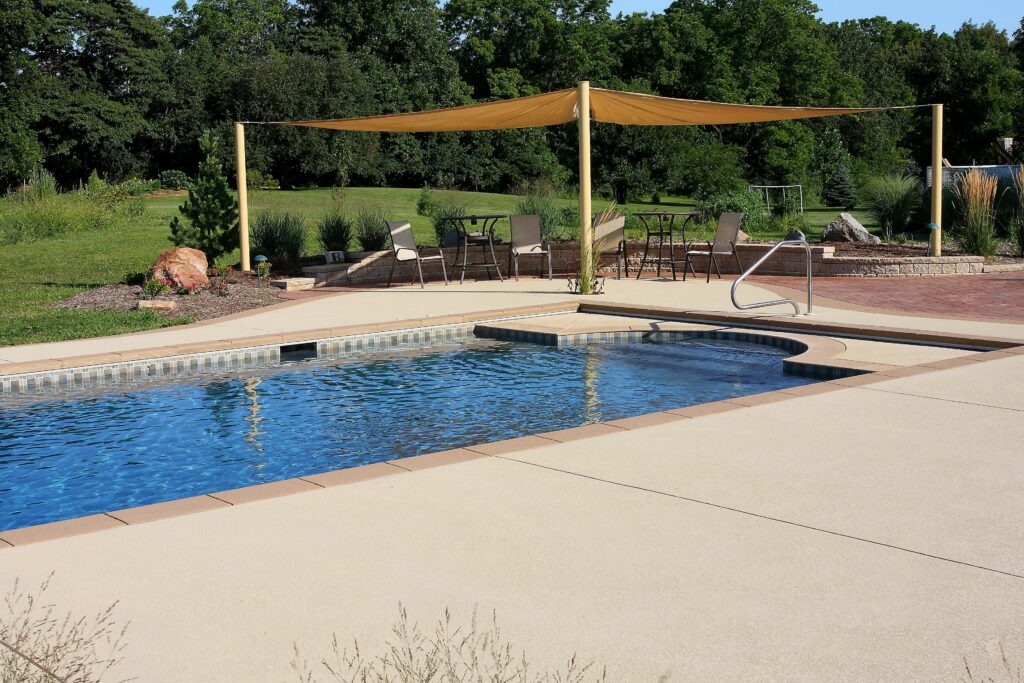 Aquarius project · Light concrete surround
Colored concrete
Integral color or other approved coloring methods can soften traditional gray and coordinate the deck with brick, siding, stonework or the pool’s coping. Subtle earth tones often make a large paved area feel more connected to the landscape.
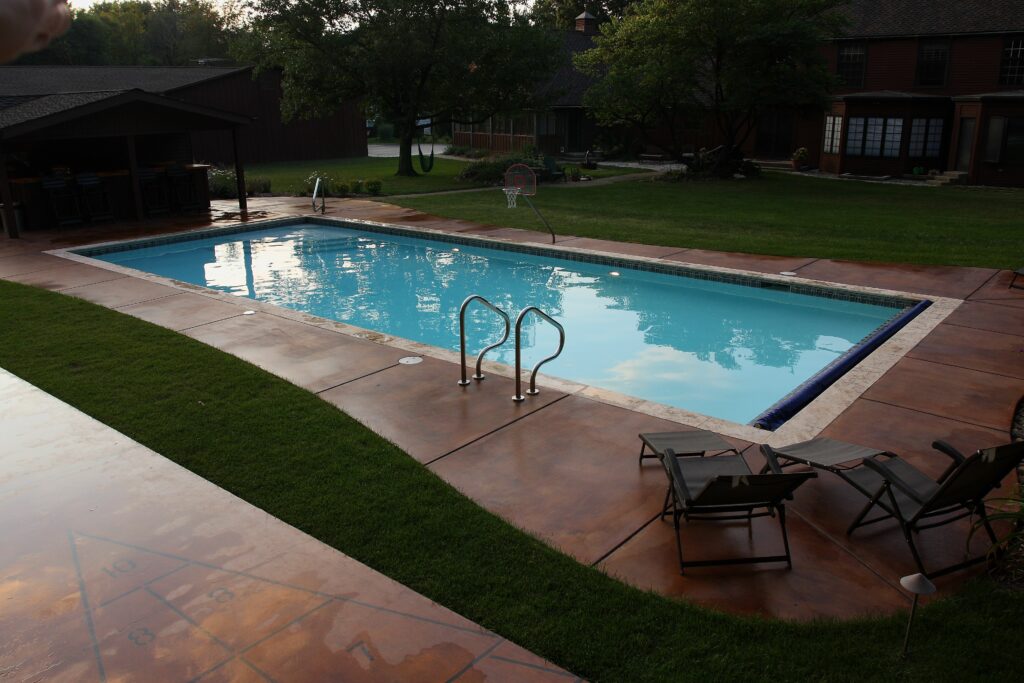 Aquarius project · Warm-toned patio surface
Stamped concrete
Stamped concrete introduces the appearance of stone, slate or modular paving while retaining a poured surface. Pattern scale, release color, border choice and joint placement all influence whether the result feels quiet and refined or more expressive.
Aquarius project · Patterned deck treatment
Pavers
Concrete or porcelain pavers offer a tailored, modular appearance with many size, color and pattern combinations. They are especially effective for defining outdoor rooms, carrying a pattern into a larger patio and creating refined transitions at borders.
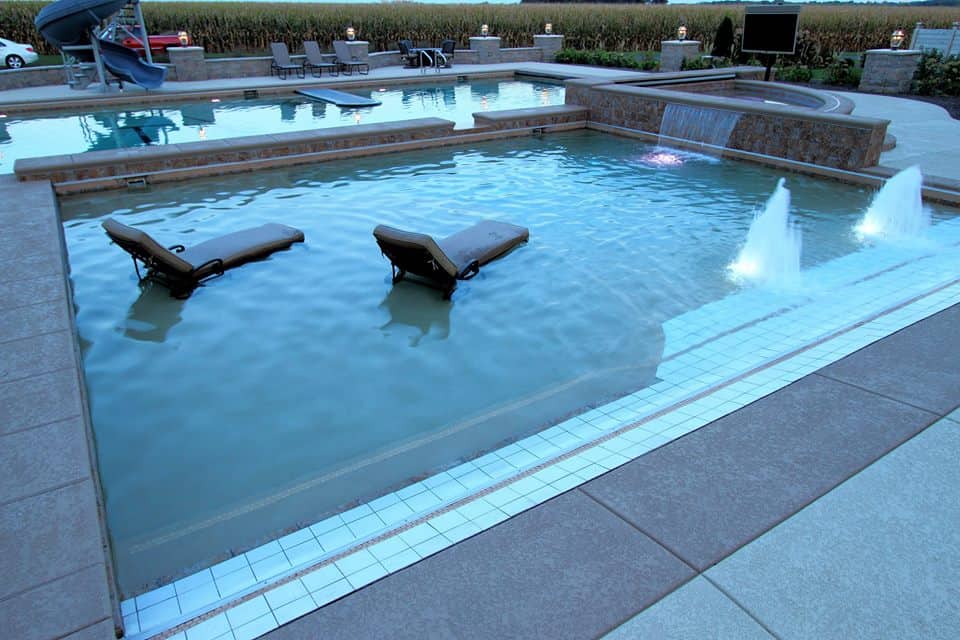 Aquarius project · Layered deck colors and borders
Natural stone
Natural stone brings unique movement, texture and color variation to an outdoor setting. It can be used as a primary patio material, an accent, a border or a visual bridge to stone already present on the home, retaining walls or outdoor kitchen.
Aquarius project · Pool deck coordinated with stone architecture
Deck borders
A border can outline the pool, frame a patio zone, repeat a color from the coping or separate two surface treatments. Used with restraint, it gives the deck a finished, intentional edge without competing with the water.
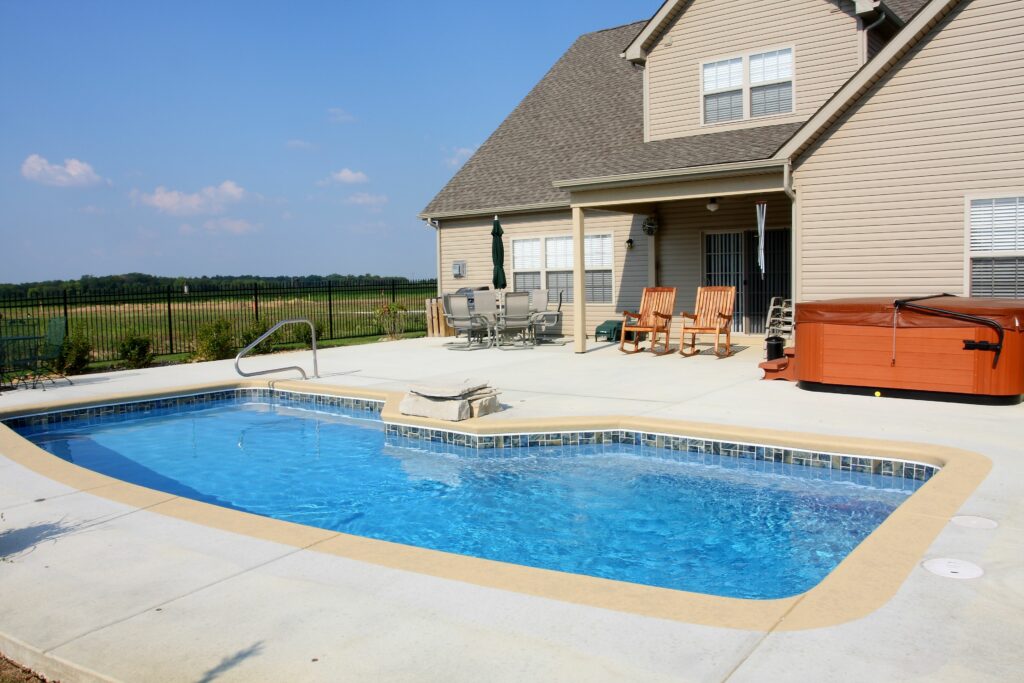 Aquarius project · Contrasting pool-deck border
Project photography shows completed Aquarius pools for design inspiration. Available materials, colors, installation methods and suitability vary by product, site and project scope.
| Material | Visual character | Design flexibility | Planning focus | Often chosen for |
|---|---|---|---|---|
| Standard concrete | Clean, quiet, understated | Joint layout, finish and borders | Pitch, joints, finish texture | Practical, open pool decks |
| Colored concrete | Warm, coordinated, subtle | Color palette and border pairing | Sample review and solar exposure | Connecting deck to home materials |
| Stamped concrete | Textured, patterned, expressive | Pattern, release color and bands | Texture, sealer and joint layout | Stone-inspired patio character |
| Pavers | Tailored, modular, dimensional | Sizes, patterns, colors and bands | Base, restraint and drainage | Detailed outdoor-living plans |
| Natural stone | Organic, varied, distinctive | Stone selection, scale and layout | Suitability, finish and variation | Natural and estate-level settings |
A better deck starts below the surface.
Material is only one part of the decision. Elevation, water movement and the way adjoining systems meet are what make the finished space feel resolved.
Drainage & elevations
Deck pitch and drainage paths should direct water intentionally while respecting the pool, home, landscaping and surrounding grade. Depending on the layout, planning may include deck drains, channel drains and careful elevation transitions.
Coping transitions
Coping creates the finished edge at the pool and mediates the change from water to deck. Profile, thickness, color, joint layout and elevation should be coordinated with the selected patio material—not chosen independently.
Deck borders & zones
Borders can reinforce the pool shape, organize seating and dining areas, or make a material transition feel deliberate. The strongest designs use border lines to support circulation and architecture.
Movement & access
Control joints, expansion details and access to covers or equipment must be considered early. Thoughtful layout helps technical requirements sit naturally within the overall deck composition.
Plan for sun, water and real life.
No poolside surface is “slip-proof,” and every material responds differently to heat, moisture, finish and maintenance. We help you evaluate the actual product in the context of your yard.
Color & solar exposure
Lighter colors typically absorb less solar heat than darker tones, but product composition, time of day and shade all affect surface temperature.
Texture & wet traction
Surface finish influences grip and barefoot feel. A texture should support wet-area use without becoming unnecessarily harsh underfoot.
Shade & circulation
Umbrellas, structures, landscape shade and clear walking routes can improve comfort as much as the surface palette itself.
Samples & expectations
Review physical samples outdoors whenever possible. Natural variation, weathering and lighting mean installed materials may not look identical to a screen or small sample.
Installed pool and patio inspiration.
Real local projects show how deck color, borders, coping and layout can change the entire personality of a backyard.
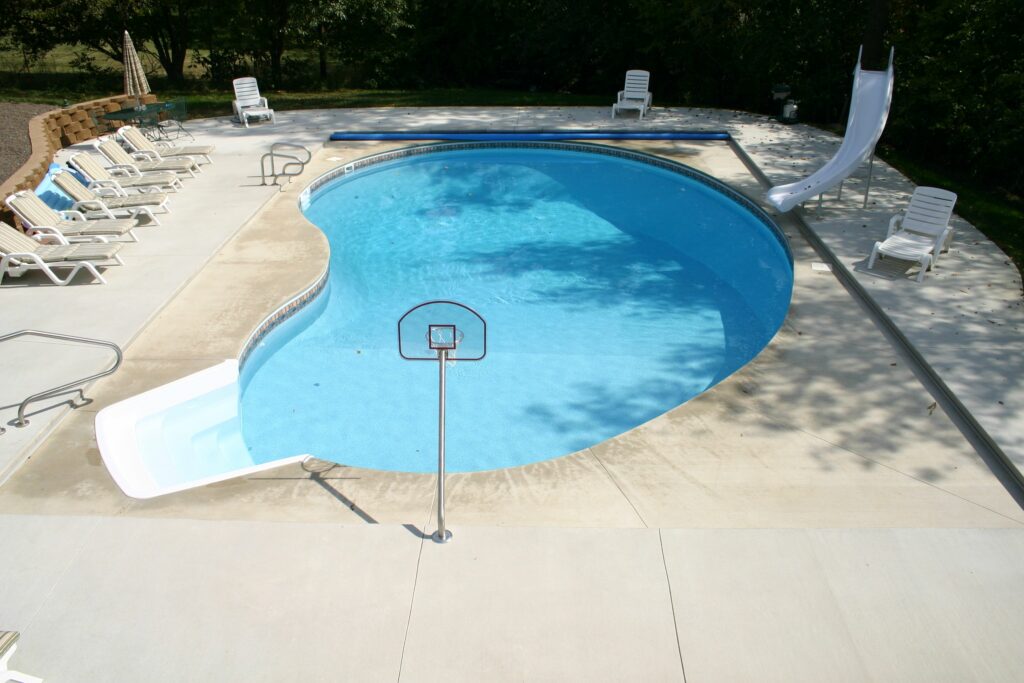
Aquarius project photography. Captions describe visible design characteristics and are intended for inspiration; confirm exact material selections and availability during design.
Renovation and resurfacing options.
A worn or dated deck can make the entire pool feel older than it is. Aquarius can help evaluate the surface and determine which improvement path fits the existing conditions and your goals.
- 01Condition review: examine cracking, movement, drainage and transitions before selecting a finish.
- 02Resurfacing: consider compatible overlay or finish systems where the existing substrate is appropriate.
- 03Selective replacement: update targeted sections, borders or adjoining patio areas when practical.
- 04Full replacement: rebuild the deck when broader layout, elevation or condition concerns call for a new start.
- 05Coordinated updates: pair deck work with new coping, tile, pool finish, drainage corrections or equipment planning.
Not every surface is a candidate for resurfacing. The right recommendation depends on the existing material, movement, drainage and overall condition.
How deck planning comes together.
The goal is a coordinated design that accounts for the way your family will use the backyard and the way the site needs to perform.
Use & priorities
Define seating, dining, lounging, play, shade and the routes people will use most.
Site & layout
Review elevations, drainage, home connections, utilities and practical equipment access.
Material palette
Coordinate deck, coping, borders and surrounding architecture with comfort in mind.
Construction details
Resolve transitions, joints, drains and other technical details within the final plan.
Pool decking FAQs.
Every backyard is different. These starting points can help you prepare for a design conversation.
Which pool deck material stays coolest?
There is no single answer for every product and yard. Lighter colors generally absorb less solar heat than darker colors, while material composition, finish, shade and time of day also matter. Compare the exact products under consideration and plan shade where it will have the greatest impact.
What is the best slip-resistant pool deck?
No wet surface should be described as slip-proof. Poolside traction depends on the exact product, texture, sealer, slope, drainage and maintenance. Aquarius can help you evaluate a finish intended for wet-area use while also considering barefoot comfort.
How much deck space should I plan around a pool?
That depends on the pool shape and how you want to use the backyard. Start with clear walking routes and room at entries, then account for loungers, dining furniture, umbrellas, entertaining and equipment access. A scaled layout is more useful than one universal dimension.
Can an existing concrete pool deck be resurfaced?
Sometimes. Resurfacing depends on the substrate, movement, cracks, drainage and compatibility with the proposed system. An on-site condition review is the right first step; significant movement or layout concerns may make selective or full replacement a better long-term direction.
Should coping match the deck?
It can match, coordinate or intentionally contrast. The most cohesive selections usually share an undertone or repeat a color found elsewhere in the home or landscape. Profile, thickness, joint layout and elevation are just as important as color.
When should drainage be planned?
At the beginning. Pool elevation, deck pitch, surrounding grade, patio connections and runoff paths influence one another. Early coordination makes drains easier to integrate into the design and helps avoid awkward elevation changes later.
Let’s plan a pool deck that looks right and lives well.
Bring your inspiration, questions and wish list. The Aquarius team will help connect the pool, patio, coping and surrounding features into one thoughtful outdoor-living plan.